
Invited Speakers 特邀嘉宾
The invited speaker list is in attendance confirmation time order. | 特邀报告名单按确认参会的时间先后顺序排列。
 Prof. Jingwei Xu,
Xidian University, China
Prof. Jingwei Xu,
Xidian University, China
Jingwei Xu received the B.S. degree in electronic
engineering, and the Ph.D. degree in signal and
information processing, both from Xidian University,
China, in 2010 and 2015, respectively. He currently
serves as Professor at School of Electronic
Engineering, Xidian University. From 2015 to 2017,
he was a lecturer at National Lab of Radar Signal
Processing in Xidian University. From 2017 to 2019,
he was a Postdoctoral Fellow under “Hong Kong
Scholar Program” at Department of Electronic
Engineering, City University of Hong Kong. From 2019
until 2024, he is the Associate Professor position
in Xidian University.
His research interests include array signal
processing, space-time adaptive processing,
multiple-input multiple-output radar, frequency
diverse array radar, waveform diversity, and
multi-functional fusion processing.
He received the prize for excellent Ph.D.
dissertation of the Chinese Institute of Electronics
and the excellent Ph.D. dissertation of Shannxi
Province in 2017. He received the Youth Science and
Technology New Star of Shaanxi Province in 2021, and
the Outstanding Young of Shanxi Province in 2022. He
received the Excellent Youth of NSFC in 2024. He
currently serves as Associate Editor for IEEE
Transactions on Aerospace and Electronic Systems,
and Associate Editor for IEEE Aerospace and
Electronic Systems Magazine.
 Prof. Mingliang Tao, Northwestern Polytechnical University, China
Bio: Prof. Mingliang Tao, Professor and Vice
Dean at Northwestern Polytechnical University (NPU),
China. He received his Ph.D. in Signal and
Information Processing from Xidian University in
2016. His doctoral dissertation was recognized with
the Excellent Doctoral Dissertation Award from the
China Education Society of Electronics and the
Shaanxi Provincial Excellent Doctoral Dissertation
Award. Prof. Tao is a recipient of the IEEE
Geoscience and Remote Sensing Society (GRSS) Early
Career Award and the URSI Young Scientist Award. He
currently serves as the Co-Chair of the IEEE GRSS
Frequency Allocations in Remote Sensing (FARS)
Technical Committee.
 Assoc.
Prof. Chunguo Li (IET Fellow), Southeast University, China
Assoc.
Prof. Chunguo Li (IET Fellow), Southeast University, China
Bio: Chunguo Li received the bachelor's
de-gree in wireless communications from
ShandongUniversity in 2005, and Ph.D. degree in
wire-less communications from Southeast University
in 2010. In July 2010, he joined as a FacultyMember
with Southeast University, where he wasan Associate
Professor from 2012 to 2016 anda Full Professor
since 2017. From June 2012 toJune 2013, he was the
Postdoctor with ConcordiaUniversity, Montreal,
Canada. From July 2013 to August 2014, he was with
the DSL laboratory of Stanford University as
Visiting Associate Professor. From August 2017 to
July 2019, he was the adjunct professor of Xizang
Minzu University under the supporting Tibet program
organized by China National Human Resources
Ministry.
He is the Fellow of IET, Fellow of China Institute
of Communications(CIC), Chair of IEEE Computational
Intelligence Society Nanjing Chapter,and Chair of
Advisory Committee for Instruments industry in
Jiangsuprovince. He is currently the Subject Editor
for Journal of The FranklinInstitute since 2025, and
is serving as an Editor for IEEE Transactions
onCommunications since 2025. He has served as
Associate Editor for a coupleof international
journals and as session chair for many international
confer-ences. His research interests are in
cell-free massive MIMO networks, AI-based wireless
communications, information theories, and AI-based
audio signal processing.
 Assoc.
Prof. You You, Purple Mountain
Laboratories, China
Assoc.
Prof. You You, Purple Mountain
Laboratories, China
Bio: You You received the B.S. degree in Information
Science and Engineering from Southeast University in
2012, and the M.S.E. degree in Communications and
Signal Processing from the University of Leeds and
Nanjing University of Science & Technology, in 2015
and 2016, respectively, and the Ph.D. degrees from
the University of Leeds in 2021. He is currently an
Associate Professor with the Purple Mountain
Laboratories, Nanjing, China. His research interest
is focused on algorithms and implementations for
signal processing and communication systems. He has
published more than 10 articles indexed in SCI and
EI as the first author. He has applied for and
received authorization for over 10 invention
patents. He has been a Topic Coordinators of
Frontiers in Communications and Networks. He has
served as a Tutorial Speaker for IEEE APCCAS 2022, a
Local Arrangement Chair for ICTC 2022 and ICTC 2023,
and a Session chair for ICCT 2022.
 Assoc. Prof. Junjie Shi
Harbin Engineering University, China
Bio:
Junjie Shi received
his B.E. degree in Electronic and Information
Engineering and Ph.D. degree in Underwater Acoustic
Engineering of Harbin Engineering University in 2005
and 2011 respectively. From 2011, he started his
work in Harbin Engineering University, with the
research interests including the acoustic field
calculation and analysis, the underwater acoustic
signal processing and underwater target detection
and classification in the very low frequency. During
Jan. 2016 and Jan. 2017, he worked as a Visiting
Scholar cooperating with Stan E. Dosso in University
of Victoria, Canada. Until now, he has won a first
and a second prizes for technology invention in his
research field, and published more than 20 papers in
The Journal of the Acoustical Society of America,
Applied Acoustics, IET Radar, Sonar & Navigation,
Acta Physics Sinica etc.
 Assoc. Prof. Chenghu Cao
Xi'an University of Posts and Telecommunications, China
Bio: Chenghu Cao,
Associate professor. He has been graduated from
Xidian University and finally obtains a doctoral
degree. And he is working in Xi'an University of
Posts and Telecommunications now. The applicant has
previously engaged in research work on radar target
parameter estimation, radar weak target detection
and tracking, collaborative radar network detection,
and integrated sensing and communication. He has
presided over a key project of the Shaanxi
Provincial Department of Science and
Technology-Qinchuangyuan Industrial Innovation
Cluster Area "Four Chains" Integration Project, as
well as a youth project from the same department,
along with serving local special projects from the
Shaanxi Provincial Department of Education and
interdisciplinary projects at Xi'an University of
Posts and Telecommunications. As the first author,
he has published more 25 academic journal papers in
renowned domestic and international journals such as
IEEE Transactions on Aerospace and Electronic
Systems, IEEE Transactions on Vehicular Technology,
Signal Processing, and Digital Signal Processing.
 Prof. Tao Liu
Naval University of Engineering, China
Bio: Tao Liu is currently a Professor with
the School of Electronic Engineering, Naval
University of Engineering, Wuhan, China. He received
the B.S. degree in communication engineering and the
Ph.D. degree in information and communication
engineering from the National University of Defense
Technology, Changsha, China, in 2001 and 2007,
respectively. Since 2007, he has been He has
authored more than 50 journal papers and three
books. His research interests include statistical
theory of radar polarization, polarization
information processing, synthetic aperture radar
(SAR) automatic target recognition, statistical
modeling of SAR image, SAR ship detection, InSAR
(interferometric SAR), SAR ground moving target
indication, and Artificial Intelligence., Dr. Liu
was the recipient of Award of Excellent Doctor
Thesis of Chinese Army, in 2009. Since 2019, he has
been a committee member in Radar Branch of the
Chinese Institute of Electronics.
 Assoc. Prof. Wasiq Ali
Harbin Engineering University, China
Bio: Wasiq Ali
received his B.Sc. degree in Electronics Engineering
from COMSATS University Islamabad, Pakistan, in
2012, and his M.S. degree in Electrical Engineering
(Wireless Communication) from COMSATS University
Islamabad in 2015. He obtained his Ph.D. degree in
Underwater Acoustic Signal Processing from
Northwestern Polytechnical University, Xi’an, China,
in 2021. He completed his postdoctoral research at
Harbin Engineering University, China, in March 2025,
and is currently working as an Associate Professor
at the College of Underwater Acoustic Engineering,
Harbin Engineering University, Harbin, China. Prior
to this, he served as an Assistant Professor at
COMSATS University Islamabad, Pakistan. His research
interests include underwater acoustic signal
processing, passive target tracking, deep
learning-based intelligent estimation,
direction-of-arrival estimation, and MIMO channel
estimation. Dr. Wasiq Ali has made significant
contributions to underwater passive target tracking
and intelligent signal processing. He has published
more than 50 research papers in reputed
international journals and conferences, including
Ocean Engineering, Applied Acoustics, Signal
Processing, Digital Signal Processing, IEEE Sensor
Journal, IEEE journal of selected topics in applied
earth observations and remote sensing, and Remote
Sensing. His research focuses on integrating
artificial intelligence with physical modeling for
robust state estimation in challenging underwater
environments. He has also actively collaborated with
international researchers and contributed to
interdisciplinary projects in underwater acoustics
and intelligent systems.
 Lecturer Peibei Cao
Nanjing University of Information Science and Technology, China
Bio: Peibei Cao
received her doctoral degree from City University of
Hong Kong. She is now a faculty member at Nanjing
University of Information Science and Technology.
Her research interests lie in perceptual multimedia
signal processing, quality evaluation and low-level
vision. She has published numerous papers in
prestigious journals and conferences in computer
vision such as CVPR, ECCV and TVCG.
 Dr. Yi Li
Nanjing University of Information Science and Technology, China
Bio: Yi Li
received the M.S. degree in Information and Signal
Processing in 2021 and the Ph.D. degree in
Information and Communication Engineering in 2026,
from College of Electronic and Information
Engineering, Nanjing University of Aeronautics and
Astronautics, Nanjing, China. He is currently with
the School of Electronic and Information
Engineering, Nanjing University of Information
Science and Technology. His research interests
include millimeter-wave radar signal processing and
imaging.
 Lecturer Zhuang Xie
National University of Defense Technology, China
Bio: Zhuang Xie
received the B.S. degree in Electronic Information
Engineering from the Harbin Institute of Technology,
Harbin, China, in 2018, and the M.S. and Ph.D.
degrees in Information and Communication Engineering
from the National University of Defense Technology,
Changsha, China, in 2020 and 2024, respectively. He
is currently a Lecturer with the College of
Electronic Science and Technology, National
University of Defense Technology. His research
interests include radar signal processing and
optimization theory, with emphasis on radar waveform
design.
 Senior Engineer Wen Fan
Xi'an University of Posts and Telecommunications, China
Bio: Dr. Wen Fan
is currently a Senior Engineer at the School of
Communications and Information Engineering, Xi’an
University of Posts and Telecommunications. He
received his Ph.D. in Electronic Science and
Technology from Northwestern Polytechnical
University in 2021, and was a visiting scholar at
the University of Naples Federico II, Italy.
His research centers on radar waveform design and
array signal processing, recently extending to
dual-function radar-communication systems and sparse
array optimization, developing end-to-end expertise
from algorithmic theory to system-level validation.
Dr. Fan has published over 20 first-authored papers
in leading international journals such as IEEE TSP
and Elsevier Signal Processing. He has led or
contributed to a number of national-level research
projects. His honors include the Second Prize of
Hebei Provincial Science and Technology Progress
Award and the Excellent Doctoral Dissertation Award
of Northwestern Polytechnical University. He serves
as a reviewer for more than 10 leading international
journals, including IEEE TSP and IEEE TAES.
 Assoc. Prof. Yongjun Liu,
Xidian University, China
Assoc. Prof. Yongjun Liu,
Xidian University, China
Bio:Yongjun Liu was born in Shaanxi, China. He received
the B.S. degree in electronic engineering and the
Ph.D. degree in signal and information processing
from Xidian University, Xi’an, China, in 2013 and
2019, respectively. From 2017 to 2019, he was a
Visiting Ph.D. Student with the Department of
Electrical and Computer Engineering, Lehigh
University, Bethlehem, PA, USA. He is currently an
associated professor with the National Key
Laboratory of Radar Signal Processing, Xidian
University. His research interests include
integrated waveform design, counter reconnaissance
and anti-jamming, target detection, and array signal
processing.
 Assoc. Prof. Yimao Sun,
Sichuan University, China
Assoc. Prof. Yimao Sun,
Sichuan University, China
Bio:Yimao Sun is an
Associate Professor at the College of Computer
Science, Sichuan University, Chengdu, China. He
received the B.S. degree from the School of
Electronic Engineering, University of Electronic
Science and Technology of China (UESTC), Chengdu,
China, in 2013, and the Ph.D. degree from the School
of Information and Communication Engineering, UESTC,
in 2019. He was awarded a scholarship from the China
Scholarship Council under the State Scholarship Fund
in 2017. From 2019 to 2023, he was a researcher of
courtesy appointment with the Department of
Electrical Engineering and Computer Science,
University of Missouri. He is an IEEE Senior Member
and an CIE Member. His research interests include
source localization, deep learning, array signal
processing, and parameter estimation. He has
authored or co-authored more than 80 journal and
conference papers, and has also served as a reviewer
for leading IEEE journals and conferences.
 Assoc. Prof. Tianyi Jia,
Xidian University, China
Assoc. Prof. Tianyi Jia,
Xidian University, China
Bio:Tianyi Jia received the B.S. degree in information
and computing science and the Ph.D. degree in
information and communication engineering from the
Northwestern Polytechnical University (NWPU), Xi’an,
China, in 2014 and 2021, respectively. From 2017 to
2019, he was a Visiting Student with the Department
of Electrical Engineering and Computer Science,
University of Missouri, Columbia, MO, USA. Since
2021, he has been with Xidian University, Xi’an,
China, where he is currently an Associate Professor
with the National Key Laboratory of Radar Signal
Processing. His current research interests include
object localization, target tracking, radar signal
processing and sensor array processing. Dr. Jia has
coauthored about 40 conference and journal articles.
His dissertation won the outstanding doctoral
dissertation of NWPU.
 Assoc. Prof. Helin Yang,
Xiamen University, China
Assoc. Prof. Helin Yang,
Xiamen University, China
Bio:Helin Yang, associate professor, Xiamen
University, IEEE Senior Member, he is a high-level
overseas talent recognized by the Ministry of Human
Resources and Social Security of China. He achieved
Ph.D. degree from Nanyang Technological University.
He has over 100 published papers in journals and
conferences, some of papers are ESI highly cited or
hot papers, and he has consistently ranked in the
top 2% of scientists from 2021 to the present. His
researches include 5G/6G communications, network
security, and intelligent communication. He serves
as an editorial board member for several SCI
journals and conference program chair, and has
received over 10 awards.
 Asst. Research Fellow Jun Sun,
Xidian University, China
Asst. Research Fellow Jun Sun,
Xidian University, China
Bio: Jun Sun, received the Ph.D. degree from University
of Electronic Science and Technology of China,
China. He is currently an Assistant Research Fellow
at Xidian University. He was a jointly trained Ph.D.
student at the University of Pisa, Italy. His
research interests include cognitive radar resource
scheduling, target tracking, and interference
suppression. He has published over 20 academic
papers. He has served as the Principal Investigator
for projects supported by the Postdoctoral
Fellowship Program of CPSF (Grade B) and the General
Program of the China Postdoctoral Science
Foundation, and has participated in more than 10
national-level research projects. He was awarded the
title of "Rising Star of Radar" in 2026. He has
served as a reviewer for several prestigious
journals, including IEEE Transactions on Signal
Processing and IEEE Transactions on Aerospace and
Electronic Systems.
 Prof. Yanyang Liu,
Shanghai Institute of Satellite Engineering, China
Prof. Yanyang Liu,
Shanghai Institute of Satellite Engineering, China
Bio: Liu Yanyang, Ph.D., is
a Professor and Ph.D. Supervisor at the Shanghai
Institute of Satellite Engineering. He is a
recipient of a National-Level Young Talent Program.
His research focuses on the design of novel radar
satellite systems and signal processing
technologies. He has published more than 60 academic
papers, been granted over 30 patents, and received
four provincial- or ministerial-level science and
technology awards.
Speech Title: Applications of coherence in
imaging processing of azimuth multi-channel SAR
systems
 Assoc. Prof. Wenpeng Zhang,
National University of Defense Technology, China
Assoc. Prof. Wenpeng Zhang,
National University of Defense Technology, China
Bio: Zhang Wenpeng is an associate professor and master’s
supervisor at the School of Electronic Science and
Technology, National University of Defense
Technology. His research has long centered on radar
feature extraction and target recognition. He has
served as principal investigator on six major
scientific research projects, including those funded
by the National Natural Science Foundation of China
and the China Postdoctoral Science Foundation. He
has published over 50 papers in leading domestic and
international journals and conferences, such as IEEE
TSP, TIM, and TAES, and holds more than 20
authorized patents. In recognition of his
contributions, he has received multiple Science and
Technology Progress Awards, including national and
provincial/ministerial-level honors. He was also
selected as a young talent under the Science and
Technology Innovation Program of Hunan Province.
 Assoc. Prof. Hongxia Miao,
Beijing University of Posts and Telecommunications, China
Assoc. Prof. Hongxia Miao,
Beijing University of Posts and Telecommunications, China
Bio: Hongxia Miao was born in Hebei province, China. She
received the Ph.D. degree in information and
communication engineering from the Beijing Institute
of Technology, Beijing, China, in 2021. She is
currently an Associate Professor with the State Key
Laboratory of Networking and Switching Technology,
School of Information and Communication Engineering,
Beijing University of Posts and Telecommunications,
Beijing, China. Her current research interests
include time-frequency analysis, cyclostationary
signal processing, near-field ISAC, and intelligent
signal processing.
Speech Title: Target Sensing for Near-Field
Integrated Sensing and Communication with
Ultra-Large-Scale Arrays
Abstract: This talk focuses on near-field
integrated sensing with ultra-large-scale arrays for
6G mmWave systems. First, we introduce the
fundamental challenges of near-field target
perception, including spherical wavefront distortion
and high-speed user Doppler interference. From two
core dimensions of sensing algorithms and
theoretical performance bounds, we systematically
elaborate our series works. For pure near-field
localization, a discrete fractional Fourier
transform (FrFT) combined quasi-Newton refinement
estimator is proposed to jointly resolve range,
angle and radial velocity, effectively mitigating
off-grid errors. For hybrid far-near-field
scenarios, we design a sliding fractional
synchrosqueezing transform (SFSST) to separate
linear frequency modulation components, paired with
ridge extraction for low-complexity channel and
target parameter estimation. Furthermore, beyond the
classic Cramér-Rao Bound (CRB) only valid at high
SNR, we derive the Ziv-Zakai Bound (ZZB)
incorporating parameter prior information, which
accurately characterizes estimation errors across
full signal-to-noise regimes. Simulations verify the
superior accuracy and robustness of our proposed
frameworks.
 Dr. Wenshuai Ji,
Shenzhen University, China
Dr. Wenshuai Ji,
Shenzhen University, China
Bio: Dr. Ji Wenshuai,
Shenzhen University. He received his Ph.D. degree in
Information and Communication Engineering from the
School of Electronics and Communication Engineering,
Sun Yat-sen University, in September 2025. In
October 2025, he joined the Postdoctoral Research
Station in Information and Communication Engineering
at Shenzhen University.
His research interests include array signal
processing, MIMO radar signal processing, integrated
sensing and communication (ISAC) waveform design,
and weak target detection. He has published more
than ten papers in leading SCI journals and top-tier
international conferences, including IEEE
Transactions on Communications, IEEE Internet of
Things Journal, and ACM MobiCom. He also serves as a
reviewer for several prestigious journals such as
IEEE Transactions on Communications, IEEE
Transactions on Aerospace and Electronic Systems,
and Signal Processing.
 Asst. Prof. Fei He,
Southwest Jiaotong University, China
Asst. Prof. Fei He,
Southwest Jiaotong University, China
Bio: Fei He received the B.E. degree in Electrical
Engineering from Sichuan University, Chengdu, China,
in 2019, and the M.S. degree in Biomedical
Engineering from the same university in 2022. She
received the Ph.D. degree in Information and
Communication Engineering from the University of
Electronic Science and Technology of China (UESTC),
Chengdu, China, in 2026. She is currently an
Assistant Professor with the School of Electrical
Engineering, Southwest Jiaotong University, Chengdu,
China.
Her research interests include tensor decomposition
and representation learning for biomedical signal
processing and medical image analysis, with
applications to speech signals,
electroencephalography (EEG), and diffusion tensor
imaging (DTI) data. She has authored more than 20
journal and conference publications in the field of
biomedical signal processing. Her research has
appeared in leading journals and conferences,
including IEEE Transactions on Image Processing,
IEEE Transactions on Biomedical Engineering,
IEEE/ACM Transactions on Audio, Speech, and Language
Processing, IEEE Transactions on Automation Science
and Engineering, IEEE International Conference on
Acoustics, Speech and Signal Processing (ICASSP),
IEEE International Symposium on Circuits and Systems
(ISCAS), and others.
 Prof. Maolin Wang,
Jinan University, China & Zhanjiang University of Science and Technology, China
Prof. Maolin Wang,
Jinan University, China & Zhanjiang University of Science and Technology, China
Bio: Maolin Wang, Ph.D. Professor and Doctoral Supervisor, Post‑doctoral Co‑supervisor, College of Chinese Language and Culture, Jinan University; Professor, School of Culture and Media, Zhanjiang University of Science and Technology.
He serves as a committee member of the Phonetics Branch of the Chinese Linguistics Society, member of the Basic Acoustics Sub‑Committee of the National Acoustics Standardization Technical Committee, member of the National Phonology Professional Committee, expert of Guangdong Provincial Language and Characters Commission, and editorial board member of Journal of Chinese Phonetics.
He obtained his doctoral degree from the Graduate School of Chinese Academy of Social Sciences in 2003. His research focuses on Chinese phonetics. He has presided over the National Social Science Fund project, Humanities and Social Science Fund of the Ministry of Education, Guangdong Provincial Social Science Fund, and National Language Resource Conservation Project.
He has published dozens of papers in SSCI, CSSCI, EI‑indexed journals and EI conferences, and authored the monograph A Study on Prosodic Patterns of Spontaneous Chinese Speech. He was awarded the First Prize for Outstanding Achievements in Philosophy and Social Sciences of Guangdong Province.
 Prof. Feng Tong,
Xiamen University, China
Prof. Feng Tong,
Xiamen University, China
Bio: Feng Tong (Member, IEEE) received the Ph.D. degree in Marine physics from the Xiamen University, China, in 2000. He is currently a Professor with the Department of Applied Marine Physics and Engineering, Xiamen University. His research interests include underwater acoustic communication and acoustic signal processing. He published more than 60 peer-reviewed articles and holds 30 patents across acoustic communication and signal processing. He has been serving as Council Member of the Acoustical Society of China (21-26) and Member of the Underwater Communications Committee of the Chinese Society of Communications. He served as an Editorial Board member of the Journal of Marine Science and Application, and also served as General Co-Chair of the WUWNET2025 and WUWNET2026.
 Senior Engineer Cheng Wang,
Hangzhou Applied Acoustics Research Institute, China
Senior Engineer Cheng Wang,
Hangzhou Applied Acoustics Research Institute, China
Bio: Wang Cheng, Senior Engineer, Hangzhou Applied Acoustics Research Institute. His primary research covers the theory and engineering application of active sonar signal processing. He has presided over four national and provincial scientific research projects, including basic strengthening field funds and key laboratory stable support programs. Serving as the head of the detection subsystem for a major project, he has made multiple technical breakthroughs in areas including active target identification and deep-sea reverberation suppression. He has published more than 10 high-level academic papers and filed over 10 invention patents.
 Assoc. Prof. Peng Li,
Nanjing University of Science and Technology, China
Assoc. Prof. Peng Li,
Nanjing University of Science and Technology, China
Bio: Peng Li received the B. Eng. degree in electronic information engineering, M. Eng. degree in information and communication engineering and Ph. D. degree in electronic science and technology all from Nanjing University of Science and Technology, Nanjing, China. From 2014 to 2015, he worked as a Research Associate with the Department of Electrical and Computer Engineering, National University of Singapore (NUS), Singapore. He is currently a Associate Professor with the School of Electronic and Optical Engineering, Nanjing University of Science and Technology. He has authored or co-authored over 50 international journal articles and conference papers, and holds over 60 granted/filed patents in China. He has hosted over 30 research projects including the National Key R&D Program of China, and got two Ministerial Science and Technology Progress Awards. His current research interests include signal processing, integrated sensing and communications, and information metamaterials.
Speech Title: Signal Processing System for Flow Velocity Monitoring Radar (Pending Finalization)
 Postdoctoral Researcher Liu Jiapeng,
Southeast University, China
Postdoctoral Researcher Liu Jiapeng,
Southeast University, China
Bio: Liu Jiapeng is currently a Postdoctoral Researcher with the School of Information Science and Engineering, Southeast University, Nanjing, China. He received the B.Eng., M.Eng., and Ph.D. degrees in Underwater Acoustic Engineering from Northwestern Polytechnical University, Xi'an, China, in 2017, 2020, and 2026, respectively.
His main research interests focus on statistical signal processing in deep-water environments, with specific applications to passive source detection in the shadow zone of deep water. His research emphasizes robust detection with high processing gain and reduced dependence on detailed environmental information, and has recently extended to passive source localization.
He has participated in the National Key Research and Development Program of China and key projects of the National Natural Science Foundation of China (NSFC). He has published four academic papers in journals and international conference proceedings, including IEEE Transactions on Instrumentation and Measurement, IET Radar, Sonar & Navigation, and the IEEE/OES OCEANS Conference. He is also the co-inventor of four granted Chinese invention patents.
 Assoc. Prof. Muran Guo,
Harbin Engineering University, China
Assoc. Prof. Muran Guo,
Harbin Engineering University, China
Muran Guo received his Ph.D. from Harbin Engineering
University in 2019. From October 2016 to April 2018,
he was a visiting student at the Advanced Signal
Processing Laboratory in Temple University, USA. He
is currently an Associate Professor and a Master
Supervisor at the College of Information and
Communication Engineering, Harbin Engineering
University. His primary research interests include
radar signal processing, array signal processing,
compressed sensing, information theory, MIMO radar,
and signal modulation recognition. He has published
multiple papers in IEEE TSP, IEEE TAES, IEEE TVT and
IEEE SPL, and currently serves as a Youth Editorial
Board Member for Aero Weaponry and the reviewer for
journals in the signal processing field, including
IEEE TSP, IEEE TAES, Signal Processing, and IEEE
SPL.
 Prof. Hanguang Xiao,
Chongqing University of Technology, China
Prof. Hanguang Xiao,
Chongqing University of Technology, China
Bio: Hanguang Xiao is a Professor and Ph.D. supervisor currently serving as the Vice Dean of the School of Artificial Intelligence at Chongqing University of Technology. His research focuses on multimodal large models, embodied intelligent robots, image processing and machine vision, and intelligent medical signal and image diagnostics. As first author/corresponding author, he has published over 90 academic papers in prestigious SCI journals (including ESI highly-cited papers) and authored 2 academic monographs. He has led and participated in more than 20 national and provincial research projects, including multiple National Natural Science Foundation of China grants. He holds 37 invention patents (with over 20 granted) and has received honors including Chongqing University Young and Middle-aged Backbone Teacher and inaugural "Shiji Talent" at Chongqing University of Technology.
 Assoc. Prof. Shuai Shao,
Xidian University, China
Assoc. Prof. Shuai Shao,
Xidian University, China
Bio: Shuai Shao is an associate professor and master's supervisor at the School of Electronic Engineering, Xidian University. He serves as a Principal Investigator at the National Key Laboratory of Radar Signal Processing and holds the position of Deputy Director at the Xi'an International Science and Technology Cooperation Base for Cognitive Signal Processing and Information Fusion. Over the past five years, he has made significant research contributions, having published 33 peer-reviewed academic papers as first or corresponding author, including 10 articles in IEEE Transactions Top journals. His intellectual property portfolio comprises a total of 18 national invention patents. In addition, he has presided more than 10 national/ministerial projects, including the National Natural Science Foundation of China. In 2023, he was selected for the Youth Talent Support Program of Xi'an Association for Science and Technology and won the Xidian University Outstanding Doctoral Dissertation Award in the same year. He has served as the session chair of international conferences such as the ICSPS 2024, ICVISP 2024, SIILP 2022, 2021 CIE International Conference on Radar, ICCAIS 2021, and has given three invited reports in English. He has also won the Best Paper Award at international conferences three times.
 Prof. Lei Cheng,
Zhejiang University, China
Prof. Lei Cheng,
Zhejiang University, China
Bio: Lei Cheng is currently ZJU Young Professor with the College of Information Science and Electronic Engineering, Zhejiang University, Hangzhou, China. He received the B.Eng. degree from Zhejiang University in 2013, and the Ph.D. degree from The University of Hong Kong in 2018. He was a Research Scientist in Shenzhen Research Institute of Big Data, The Chinese University of Hong Kong, Shenzhen, from 2018 to 2021. He is the author of the book "Bayesian Tensor Decomposition for Signal Processing and Machine Learning", Springer, 2023. He was a Tutorial Speaker in IEEE ICASSP 2023, Invited Speaker in ASA 2024 and IEEE COA 2014. He is now Associate Editor for Elsevier Signal Processing and Young Editor for Acta Acustica.
 Assoc. Prof. Feng Xi,
Nanjing University of Science and Technology, China
Assoc. Prof. Feng Xi,
Nanjing University of Science and Technology, China
Bio: Feng Xi received the Ph.D. degree in information and communication engineering from Nanjing University of Science and Technology, Nanjing, China. He is currently an Associate Professor in the Department of Electrical Engineering, Nanjing University of Science and Technology. From 2018 to 2019, he was a visiting scholar in the Preston M. Green Department of Electrical and Systems Engineering (ESE) at Washington University in St. Louis (WUSTL). His research interests include radar signal processing, statistical signal and array signal processing, compressive sensing, and convex optimization.
 Assoc. Prof. Yanglong Sun,
Jimei University, China
Assoc. Prof. Yanglong Sun,
Jimei University, China
Bio: Yanglong Sun received the Ph.D. degree from Xiamen University, China, in 2022, received the B.S. degree and M.S degree from Zhengzhou University, China, in 2011 and 2014 respectively. He is currently an Associate Professor at Navigation College, Jimei University. He was a Visiting Ph.D. Student at the Broadband Communications Research (BBCR) Laboratory, Department of Electrical and Computer Engineering, University of Waterloo, Waterloo, ON, Canada, from 2018 to 2019. His research interests include resource allocation in mobile networks, the Internet of things, and intelligent transportation systems.
 Assoc. Prof. Zhiping Xu,
Jimei University, China
Assoc. Prof. Zhiping Xu,
Jimei University, China
Bio: Zhiping Xu received the Ph.D. degree in information and communication engineering from Xiamen University, Xiamen, China, in 2021. He is currently an Associate Professor with the School of Ocean Information Engineering, Jimei University, Xiamen, China. He has authored or coauthored more than 40 journals and conference papers. His current research interests include joint source-channel coding, coded modulation, maritime/underwater object detection, the Internet of Things, and synthetic aperture sonar/radar system.
 Assoc. Prof. Xu Chen,
Harbin Engineering University, China
Assoc. Prof. Xu Chen,
Harbin Engineering University, China
Bio: Xu Chen received the M.S. degree from Northeastern University (NEU), Shenyang, China, in 2020 and the Ph.D. degree from National University of Defense Technology (NUDT), Changsha, China, in 2024. He is currently an Associate Professor at College of Information and Communication Engineering, Harbin Engineering University (HEU), Harbin, China. His research interests include millimeter-wave radar imaging, MIMO array signal processing, and radar electronic countermeasure technology. As a key team member, he has participated in multiple projects, such as the National Key R&D Program, the National Natural Science Foundation, and the National Defense Technology Plan. To date, he has authored over ten SCI-indexed journal papers (one of which ranks in the top 1% of ESI highly cited papers for 2023). He is a long-term reviewer for high-level SCI journals such as IEEE Transactions on Instrumentation and Measurement (TIM), IEEE Transactions on Computational Imaging (TCI), IEEE Transactions on Microwave Theory and Techniques (TMTT). In 2025, he received the Outstanding Reviewer Award from IEEE TIM, a top journal in the field of instrumentation and measurement.
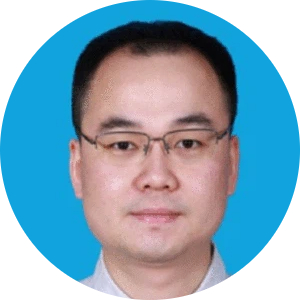 Assistant Researcher Yaowen Li,
Tsinghua University, China
Assistant Researcher Yaowen Li,
Tsinghua University, China
Bio: Yaowen Li, Tsinghua University. He received the B.S. and Ph.D. degrees in electronic engineering from Tsinghua University, Beijing, China, in 2017 and 2022, respectively. He is currently an Assistant Researcher with Tsinghua University. His main research interests include radar data processing, multitarget tracking, and multisensor information fusion.
 Postdoctoral Researcher Dingyi Ma,
Harbin Engineering University, China
Postdoctoral Researcher Dingyi Ma,
Harbin Engineering University, China
Bio: Dingyi Ma is a postdoctoral researcher at the College of Underwater Acoustic Engineering, Harbin Engineering University. Her research focuses on the modeling and parameter inversion of polar sea-ice acoustic waveguides, as well as acoustic propagation across ice-covered media. She has served as the principal investigator of a research project supported by a Key Laboratory of the Ministry of Education and has made substantial contributions to several major research programs, including projects funded by the National Natural Science Foundation of China and the National Key Research and Development Program of China. She has also led and organized multiple field experiments in ice-covered environments. To date, she has authored more than 10 peer-reviewed research papers and holds over 10 granted invention patents, in addition to serving as a reviewer for The Journal of the Acoustical Society of America (JASA).
 Special Research Assistant Yushen Wu,
Institute of Acoustics, Chinese Academy of Sciences, China
Special Research Assistant Yushen Wu,
Institute of Acoustics, Chinese Academy of Sciences, China
Bio: Yushen Wu is currently a Special Research Assistant at the State Key Laboratory of Acoustics and Marine Information, Institute of Acoustics (IOA), Chinese Academy of Sciences, Beijing, China. He received his Ph.D. degree in Acoustics from School of Physical Science at the University of Chinese Academy of Sciences (UCAS), Beijing, China, in 2023. His research focuses on underwater acoustics, including mesoscale oceanic dynamical processes, sound propagation in complex marine environments, and underwater acoustic signal processing., he has participated as a core member in several major national research projects and has published more than 10 academic papers on Applied Acoustics, Remote Sensing, and so on.
 Prof.
Boon-Chong Seet, Auckland University of Technology, New Zealand
Prof.
Boon-Chong Seet, Auckland University of Technology, New Zealand
Bio: Boon-Chong Seet received
his B.Eng, M.Eng, and Ph.D degrees from Nanyang
Technological University, Singapore, in 1999, 2001,
and 2005, respectively. Upon graduation, he joined
the Singapore-Massachusetts Institute of Technology
Alliance (SMA) Programme as a Research Fellow at the
National University of Singapore. Since 2007, he is
with the Auckland University of Technology, where he
is currently a full professor and heads the
Department of Electrical & Electronic Engineering
(EEE). He co-founded the IEEE Vehicular Technology
Society (VTS) New Zealand North (NZN) Chapter where
he had served as Vice-Chair and presently as Chair.
He is also honoured to be serving the wider VTS
communities around the world through the IEEE VTS
Distinguished Lecturers (DL) programme. His research
activities span the fields of info-communication
technologies (ICT), with a focus on sensing,
computing, and communication technologies for smart
systems. He is the author of over 190 publications
with a Scopus H-index of 29 and Google H-index of
36. He has supervised over 10 PhD students to
completion as primary supervisor.
Postdoctoral Researcher Jiapeng Liu, Southeast University, China
Bio: Liu Jiapeng is currently a Postdoctoral Researcher with the School of Information Science and Engineering, Southeast University, Nanjing, China. He received the B.Eng., M.Eng., and Ph.D. degrees in Underwater Acoustic Engineering from Northwestern Polytechnical University, Xi'an, China, in 2017, 2020, and 2026, respectively.
His main research interests focus on statistical signal processing in deep-water environments, with specific applications to passive source detection in the shadow zone of deep water. His research emphasizes robust detection with high processing gain and reduced dependence on detailed environmental information, and has recently extended to passive source localization.
He has participated in the National Key Research and Development Program of China and key projects of the National Natural Science Foundation of China (NSFC). He has published four academic papers in journals and international conference proceedings, including IEEE Transactions on Instrumentation and Measurement, IET Radar, Sonar & Navigation, and the IEEE/OES OCEANS Conference. He is also the co-inventor of four granted Chinese invention patents.
 Assoc. Prof. Guo Rui, Northwestern Polytechnical University, China
Bio: Guo Rui is an Associate Professor at Northwestern Polytechnical University. She has long been dedicated to research on microwave and lidar remote sensing technologies and their applications. She has led 8 government-funded research projects and 8 industry-collaborative projects. To date, she has published over 100 high-quality academic papers, including more than 50 as the first author; holds 10 authorized and pending invention patents; has obtained 2 computer software copyrights; and has published 1 academic monograph. She was awarded the First Prize of the Shaanxi Provincial Science and Technology Research Outstanding Achievement Award for Higher Education Institutions in 2022 (ranked third), was selected for the 2022 Shaanxi Provincial "Scientist + Engineer" Team, and received the 2026 Shaanxi Provincial Natural Science Foundation Youth Project (Category B).
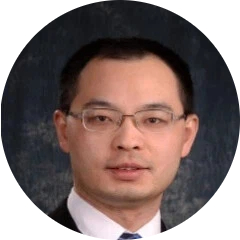 Prof. Chenguang Shi, Nanjing University of Aeronautics and Astronautics, China
Bio: Chenguang Shi received his B.S. and Ph.D. degrees from Nanjing University of Aeronautics and Astronautics in 2012 and 2017, respectively. He is currently a Professor and Doctoral Supervisor at the College of Electronic and Information Engineering, Nanjing University of Aeronautics and Astronautics, a Senior Member of the Institute of Electrical and Electronics Engineers (IEEE) and the Chinese Institute of Electronics (CIE), a Young Talent of a National Major Talent Program, a recipient of the Excellent Young Scholars Fund of Jiangsu Province, and has been selected into the World's Top 2% Scientists Rankings, with research interests including radio frequency (RF) stealth technology for aerial vehicles, collaborative detection and resource management of networked radar, and integrated radar-communication design.
 Prof. Yujun Cai, Southeast University, China
Bio: Dr. Yujun Cai is currently a Professor at the School of Information Science and Engineering, Southeast University. She received her Ph.D. degree from Nanyang Technological University, Singapore. Her research interests include underwater acoustic signal processing, intelligent signal processing, and multimodal perception. Her research focuses on developing advanced signal processing and learning-based methods for robust perception and understanding in complex environments. In particular, she is interested in signal representation and recognition, multimodal information fusion, and the integration of signal processing with artificial intelligence. She currently serves as an Associate Editor for Neurocomputing and Pattern Recognition, and as an Area Chair for leading international conferences such as CVPR, NeurIPS, and ICLR.
 Assoc. Prof. Jingjing Pan, Nanjing University of Aeronautics and Astronautics, China
Bio: Jingjing Pan received the Ph.D. degree from Nantes University, France, in 2019. She is an Associate Professor with the Electronic Engineering Department, Nanjing University of Aeronautics and Astronautics, Nanjing, China. Her research interests include array signal processing, source localization and tracking, spectrum analysis etc.
 Assoc. Prof. Donghao Ju, Chinese Academy of Sciences, China
Bio: Donghao Ju holds a Ph.D. in Engineering and is currently an Associate Professor and Master's Supervisor at the Institute of Acoustics, Chinese Academy of Sciences. Research interests include underwater acoustic signal processing and intelligent sensing, particularly weak target feature enhancement and detection in complex ocean environments, passive sonar target recognition, transient signal detection and classification, and polar underwater acoustic signal processing. Research work has been supported by the National Natural Science Foundation of China and other major national research programs. More than ten SCI/EI-indexed papers have been published in peer-reviewed journals and conference proceedings, and six patents and registered software copyrights have been filed or obtained. Research achievements include a First Prize for Outstanding Paper at an academic forum, selection of the doctoral dissertation for the 2021 Doctoral Dissertation Incentive Program, and recognition of one paper as an Annual Top-Cited Article by an international journal.
 Asst. Researcher Fellow Zhe Wang, Shanghai Jiao Tong University, China
Bio: Zhe Wang, Ph.D., is an Assistant Researcher at Shanghai Jiao Tong University. He received his Ph.D. degree and joined the Postdoctoral Research Station at Fudan University in 2021, where his work primarily focused on underwater optical wireless communications and optical camera communications. He is a recipient of funding from the China Postdoctoral Science Foundation and the Shanghai Super Postdoctoral Talent Program. His research interests include spectrally efficient underwater acoustic communication, optical/acoustic cross-medium communication, and integrated sensing and communication.
 Prof. Deqiang Han, Xi'an Jiaotong University, China
Bio: Dr. Deqiang Han is the Professor and Vice dean of School of Automation, Xi'an Jiaotong University. He is the Vice Chairman of the Information Fusion Branch of the Chinese Society of Aeronautics and Astronautics (CSAA), and Secretary General of the Shaanxi Automation Society.
His major research fields include the pattern classification, multi-modal information fusion, uncertainty modeling and reasoning. He has received one 2nd Prize of the National Science and Technology Progress Award and one 2nd Prize of the National Teaching Achievement Award.
 Assoc. Prof. Zaidao Wen, Northwestern Polytechnical University, China
Bio: Zaidao Wen received his Ph.D. in Engineering. He is an IEEE Member and Director of the Shaanxi Image and Graphics Society. He serves as a Tenured Associate Professor and Doctoral Supervisor at the School of Automation, Northwestern Polytechnical University, and is affiliated with the Key Laboratory of Information Fusion Technology of the Ministry of Education.
His research spans brain-inspired learning and cognitive theories, intelligent perception of multi-modal data under complex environments, and distributed collaborative situation awareness and decision-making using heterogeneous multi-source information. His research progresses from fundamental theoretical innovation and key technology breakthroughs to practical system integration and deployment, addressing national strategic demands.
He has published over 40 papers in high-impact IEEE journals and conferences. His recognitions include the Excellent Doctoral Dissertation Award of Shaanxi Province, the First Prize of the Science and Technology Award for Shaanxi Universities, and the Second Prize of the Technological Invention Award of the Ministry of Education.
 Assoc. Prof. Pang Chen, National University of Defense Technology, China
Bio: Pang Chen, male, is an outstanding young talent at the National University of Defense Technology, serving as associate professor and master's thesis supervisor. He has long been engaged in teaching and research on polarimetric radar target detection, recognition, and interference countermeasures. He has led or participated in over ten projects, including major programs of the National Natural Science Foundation of China, equipment pre-research projects, and key basic strengthening projects. He has published more than 60 academic papers, obtained over 20 authorized patents, authored two monographs, and received one Second Prize of the National Science and Technology Progress Award, one First Prize of the Military Science and Technology Progress Award, one China Electronic Information Industry Innovation Team Award, and one Gold Medal at the International Invention Exhibition.