
Special Session 8 会议特别专题 8
Advanced Signal Processing for Radar, Sonar, and Spectrum Sensing
Description: Radar, sonar, and spectrum
sensing are three fundamental yet interconnected
research areas that play critical roles in modern
defense, communication, and civilian systems. Radar
systems enable detection and tracking of targets in
complex electromagnetic environments, sonar systems
provide underwater surveillance and navigation
capabilities in challenging acoustic conditions, and
spectrum sensing serves as the cornerstone for
cognitive radio and dynamic spectrum access in
increasingly congested frequency bands. Despite
their distinct application domains, these three
fields share common theoretical foundations in
statistical signal processing, array processing, and
detection theory, offering rich opportunities for
cross-disciplinary synergy and innovation.
To foster academic exchange and promote
cross-fertilization among researchers in underwater
acoustic signal processing, radar signal processing,
and spectrum sensing, this special session aims to
bring together experts, scholars, research
institutions, and industry professionals from around
the world. The session will focus on the latest
research achievements, technical challenges, and
future trends in advanced signal processing
techniques applicable to radar, sonar, and spectrum
sensing systems. Discussions will cover theoretical
innovations, algorithm design, hardware
implementation, and practical applications,
providing a high-level platform for researchers
across these interconnected fields.
Session organizers
Prof. Liang An, Southeast University, China
Prof. Yan Huang, Southeast University, China
Prof. Jie Li, Nanjing University of Aeronautics and
Astronautics, China
Lecturer. Qixuan Zhu, Southeast University, China
Assi. Prof. Yiwei Wang, University of California,
USA
The topics of interest include, but are not limited to:
▪ Underwater acoustic signal processing for sonar
systems
▪ Radar signal processing for target detection and
imaging
▪ Spectrum sensing and dynamic spectrum access
▪ Multi-channel and array signal processing in radar
and sonar
▪ Machine learning and deep learning for signal
processing in radar, sonar, and spectrum sensing
▪ Anti-interference and clutter suppression
techniques
▪ Experimental validation and field trials of radar,
sonar, and spectrum sensing systems
Submission method
Submit your Full Paper (no less than 5 pages with two colums) or
your paper abstract-without publication (200-400
words) via
Online Submission System, then choose Special
Session 8 (Advanced Signal Processing for Radar, Sonar, and Spectrum Sensing)
Template Download
Introduction of
Session organizers
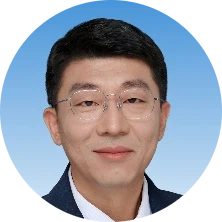 Prof. Liang An,
Southeast University, China
Prof. Liang An,
Southeast University, China
Liang An is a Chief Professor at Southeast
University and serves as the Director of the Key
Laboratory of Underwater Acoustic Signal Processing
of the Ministry of Education, a doctoral supervisor,
and the Deputy Chairman of the Jiangsu Provincial
Acoustical Society. He has been selected into the
National Major Talent Project and awarded the honor
of "Distinguished Young and Middle-aged Expert with
Outstanding Contributions in Nanjing". He has long
been engaged in research on underwater acoustic
signal interception and detection. He has undertaken
and participated in more than 40 major research
projects, including the National Natural Science
Foundation of China and the Pre-research Field Fund.
He has published over 70 papers in important
international and domestic academic journals and
conference proceedings, and authored 1 monograph
(supported by the National Publishing Fund). He has
respectively won 1 Second Class Award of the
National Science and Technology Progress Award and 1
First Class Award of the Science and Technology
Progress Award of the Ministry of Education.
 Prof. Yan Huang,
Southeast University, China
Prof. Yan Huang,
Southeast University, China
Yan Huang is a Young Chair Professor at the State
Key Lab of Millimeter Waves, Southeast University.
He has been selected for the National Young Talented
Program and the Distinguished Young Scholars Program
of Jiangsu Province. His research has a
long-standing focus on intelligent radar information
processing. Prof. Huang has served as the Principal
Investigator for 10 national-level projects. He has
delivered over 20 invited keynote or session
speeches at prestigious domestic and international
conferences. His accolades include the Innovative
Team Award from the Chinese Institute of Electronics
(CIE), the First Prize of the China Highway and
Transportation Society Award, the CIE Excellent
Doctoral Dissertation Award, and the International
URSI Young Scientist Award.
 Assoc. Prof. Jie Li,
Nanjing University of Aeronautics and Astronautics, China
Assoc. Prof. Jie Li,
Nanjing University of Aeronautics and Astronautics, China
Jie Li, associate Professor, Ph.D., is with the Key
Laboratory of Dynamic Cognitive System of
Electromagnetic Spectrum Space, Ministry of industry
and Information Technology, Nanjing University of
Aeronautics and Astronautics (NUAA). Her research
primarily focuses on intelligent radar signal
processing and multi-source fusion perception. Dr.
Li has served as the principal investigator or
sub-project lead for six high-level national and
provincial research initiatives, including the
National Major Science and Technology Projects and
the National Natural Science Foundation of China
(NSFC) Key Projects. She has published over 40
papers in top-tier international journals and holds
more than 30 invention patents. In recognition of
her technical excellence, she has been awarded the
First Prize of the National Defense Science and
Technology Progress Award, alongside prestigious
first prizes from the China Radar Industry
Association and the Radio Association.
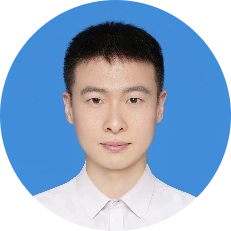 Lecturer. Qixuan Zhu,
Southeast University, China
Lecturer. Qixuan Zhu,
Southeast University, China
Qixuan Zhu is currently a Lecturer and a master's
supervisor at Southeast University. He received his
Bachelor's and Ph.D. degrees in Underwater Acoustic
Engineering from Northwestern Polytechnical
University in 2018 and 2024, respectively. His main
research interests include underwater acoustic
detection and reconnaissance. He has led
sub-projects of major and key national-level
research programs, and participated in National
Science and Technology Major Projects as well as key
projects of the National Natural Science Foundation
of China (NSFC). He has published 7 academic papers
in SCI-indexed journals and been granted 2 patents.
He was invited to deliver a keynote talk at a
sub-forum of the 17th International Conference on
Signal Processing Systems (ICSPS).
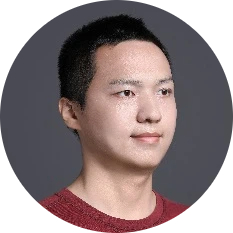 Asst. Prof. Yiwei Wang,
University of California, USA
Asst. Prof. Yiwei Wang,
University of California, USA
Yiwei Wang is currently an Assistant Professor in
the Department of Computer Science at the University
of California, Merced. He received his B.S. degree
in Information Engineering from Southeast University
in 2017, his M.Phil. degree in Electronic and
Computer Engineering from the Hong Kong University
of Science and Technology in 2019, and his Ph.D.
degree in Computer Science from the National
University of Singapore in 2023. His research
interests include signal processing, natural
language processing, and multimodal large language
models. He has published more than 40 papers in
CCF-A ranked conferences and journals. He currently
serves as an Associate Editor for IEEE Transactions
on Industrial Informatics, Pattern Recognition, and
Neurocomputing. He also serves as a Senior Area
Chair for ACL and EMNLP, and as an Area Chair for
ICML, ICLR, AAAI, NeurIPS, CVPR, and ICCV. He is a
recipient of the NSF CRII award and the NVIDIA
Academic Grant (2025).