
Special Session 3 会议特别专题 3
Underwater Vision Processing
Description: Approximately 71% of the Earth's
surface is covered by water, and the absorption,
scattering, and attenuation of light in aquatic
environments pose significant challenges to
underwater vision tasks. Current challenges include
unclear imaging of underwater vision, difficulties
of target detection and tracking, and inaccuracies
of light-field reconstruction and depth estimation.
However, with remarkable advancements in artificial
intelligence, modern vision technologies—machine
learning and deep learning—offer innovative
solutions to these above problems. Research on
underwater image processing is crucial for
developing key technologies in maritime power
strategies. This special issue, titled "Underwater
Vision Processing", summarizes recently key
technologies and their applications, covering
underwater image restoration and enhancement,
underwater image quality assessment, underwater
object detection and tracking, underwater image
depth estimation, underwater light-field
reconstruction, underwater 3D scene reconstruction,
underwater imaging and compression, and related
methods on enhancing other harsh environments (such
as haze, dust, and low-light, etc.).
Session organizers
Assoc. Prof. Peixian Zhuang, University of Science
and Technology Beijing, China
Assoc. Prof. Weiling Chen, Fuzhou University,
China
Assoc. Prof. Yang Ou, Chengdu University, China
Senior Engineer Yi Zhu, Xiamen University, China
Dr. Zhenqi Fu, Tsinghua University, China
The topics of interest include, but are not limited to:
▪ Underwater Image Restoration and Enhancement
▪ Underwater Image Quality Evaluation
▪ Underwater Object Detection and Tracking
▪ Underwater Image Depth Estimation
▪ Underwater Light-Field Image Reconstruction
▪ Underwater 3D Scene Reconstruction
▪ Underwater Imaging and Compression
▪ Marine Large Model and Technology
▪ Image enhancement in harsh environment (haze,
dust, and low-light, etc.)
Submission method
Submit your Full Paper (no less than 5 pages with two colums) or
your paper abstract-without publication (200-400
words) via
Online Submission System, then choose Special
Session 3 (Underwater Vision Processing)
Template Download
Introduction of
Session organizers
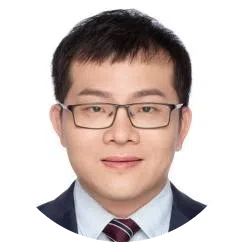 Assoc. Prof. Peixian Zhuang,
University of Science and Technology Beijing, China
Assoc. Prof. Peixian Zhuang,
University of Science and Technology Beijing, China
Peixian Zhuang received the Ph.D. degree from Xiamen
University in 2016. From 2020 to 2022, He was a
Postdoctoral Researcher in Tsinghua University. He
is currently an Associate Professor at University of
Science and Technology Beijing. He is an IEEE Senior
Member, and his research interests involve
underwater image processing, and artificial
intelligence. He has published more than 70 papers
(13 ESI Highly Cited and 7 ESI Hot Papers) in
top-tier international journals and conferences,
including IEEE TIP, TCSVT, TCYB, TGRS, TMM, with
over 5000 Google citations. He also has authored 10
Chinese invention patents. In recent years, he has
presided over a number of underwater vision
processing projects, including National Natural
Science Foundation of China, China Postdoctoral
Science Foundation, and has participated in National
Key Research and Development Program of China. He
was entitled "Young Scientist for Marine Power
Nation", ScholarGPS "World's Top 0.05% Scholars",
"World's Top 2% Scientists", "IFAC EAAI Best Paper
Award", "Outstanding Doctoral Dissertation in Fujian
Province", etc. Besides, he has served as Regional
Chair of ICIGP and Session Chair of IEEE ICSIP,
Youth Editorial Board Members of multiple journals,
Guest Editor of the Journal of Image & Graphics,
Guest Editor of the Journal of Electronics &
Information Technology, etc.
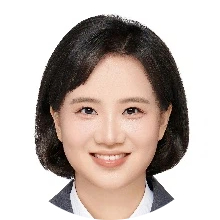 Assoc. Prof. Weiling Chen,
Fuzhou University, China
Assoc. Prof. Weiling Chen,
Fuzhou University, China
Weiling Chen received the Ph.D. degree from Xiamen
University. Currently, she is an Associate Professor
and Master's Supervisor in the College of Physics
and Information Engineering at Fuzhou University,
and is also recognized as a High-Level Talent in
Fujian Province. Her main research interests include
intelligent oceanography, computer vision,
underwater acoustic communication, etc. She has
published more than 50 peer-reviewed papers in
journals and conferences such as IEEE TIP, IEEE TMM,
TGRS, IEEE JoE, IEEE OCEANS. She has presided over
projects including the National Natural Science
Foundation of China and the Natural Science
Foundation of Fujian Province, and has participated
in projects such as the National Key R&D Program of
China and the Fujian Provincial Key Technological
Innovation and Industrialization Project in
Manufacturing. Currently, she serves as an Associate
Editor for IEEE Signal Processing Letters, an
Editorial Board Member for Scientific Reports, a
Youth Editorial Board Member for the Journal of
Marine Information, and a Youth Editorial Board
Member for the Journal of Hainan University. She has
received the Science and Technology Progress Award
from the Fujian Association of Artificial
Intelligence as the first completer. She has also
served as a Forum Chair for conferences such as IEEE
OCEANS, CSIG CCIG, CSIG Young Scientist Forum, and
ChinaMM.
 Assoc. Prof. Yang Ou,
Chengdu University, China
Assoc. Prof. Yang Ou,
Chengdu University, China
Yang Ou received the Ph.D. degree from Southwest
Jiaotong University in 2022. He was a Research
Scholar with Concordia University, Montreal, Canada,
from 2021 to 2022. From 2022 to 2025, he was a
Lecture with School of Mechanical Engineering at
Chengdu University. From 2026 to now, he is an
Associate Professor with School of Mechanical
Engineering at Chengdu University. His main research
interests include underwater image enhancement,
image restoration, and pattern recognition. He has
published more than 30 peer-reviewed papers in
prestigious international journals, and he has also
served as Workshop Chair for ICRAIC-2025, and
ICCVIT-2025.
 Senior Engineer Yi Zhu,
Xiamen University, China
Senior Engineer Yi Zhu,
Xiamen University, China
Yi Zhu received the Master of Engineering degree in
Information and Communication Engineering from
Xiamen University in 2014. From August 2014 to July
2015, he served as a Project Manager of the Network
Department at China Mobile Group Fujian Co., Ltd.
Fuzhou Branch. From August 2015 to July 2018, he
worked as an Assistant Engineer at the School of
Information Science and Technology, Xiamen
University. From August 2018 to July 2025, he served
as an Engineer at the School of Informatics, Xiamen
University. From August 2025 to present, he has been
a Senior Engineer at the School of Informatics,
Xiamen University. Since joining Xiamen University,
he has also been a core technical support member of
the Key Laboratory of Underwater Acoustic
Communication and Marine Information Technology
(Xiamen University), Ministry of Education of the
People's Republic of China. His main research
interests include underwater signal acquisition and
edge-side intelligent processing, underwater
acoustic communication and marine information
technology, intelligent analysis and enhancement of
multimedia signals, research and development of
Internet of Things and intelligent systems,
practical teaching of electronic information and
innovative talent training, etc. He has published
more than 20 peer-reviewed academic papers in
prestigious domestic and international journals and
conferences. He has won 1 first prize in
national-level teaching competitions, and has guided
students to win 2 first prizes and 5 second prizes
in national-level teaching competitions.
 Dr. Zhenqi Fu,
Tsinghua University, China
Dr. Zhenqi Fu,
Tsinghua University, China
Zhenqi Fu received the Ph.D. degree in Signal and
Information Processing from Xiamen University,
Xiamen, China, in 2023. From 2021 to 2022, he was a
Visiting Ph.D. Student at the School of Electrical &
Electronic Engineering, Nanyang Technological
University, Singapore. He is currently a
postdoctoral researcher in the Department of
Automation, Tsinghua University, Beijing, China. He
has published over 20 peer-reviewed SCI/EI-indexed
papers and has served as a reviewer for top-tier
journals and conferences, including IEEE TPAMI, IEEE
TIP, IJCV, ICLR, ICML, NeurIPS, CVPR, ICCV, ECCV,
etc. His current research interests include
Low-level Vision, Biomedical Imaging, and Deep
Learning.