
Special Session 21 会议特别专题 21
Multi-Source Perception and Tracking Fusion for Intelligent Sensing Systems
Description: Multi-source perception and
tracking fusion has become a core enabling
technology for intelligent sensing systems in
autonomous driving, robotics, unmanned platforms,
and industrial automation. By combining information
from heterogeneous sensing modalities, such as
radar, LiDAR, infrared sensors, and
communication-assisted sensing, perception systems
can achieve improved robustness, accuracy, and
situational awareness in complex and dynamic
environments. Despite its great potential,
significant challenges remain in practical
deployment. These include sensor heterogeneity,
spatial-temporal synchronization, calibration
errors, uncertainty propagation, clutter and
occlusion, and incomplete observations. In addition,
robust target tracking and fusion in dense,
adversarial, or degraded environments require new
approaches that jointly exploit complementary
sensing information and advanced learning-based or
model-based methods.
This special session aims to bring together
researchers and practitioners from academia and
industry to present the latest advances in
multi-source perception, target tracking, and fusion
methodologies. The session will provide a focused
platform for discussing theories, algorithms,
architectures, datasets, benchmarks, and real-world
applications for next-generation intelligent sensing
and tracking systems.
Session organizers
Assoc. Prof. Guchong Li, Northwestern Polytechnical University, China
Dr. Yaowen Li, Tsinghua University, China
Assoc. Prof. Tuanwei Tian, Henan University, China
Assoc. Prof. Muran Guo, Harbin Engineering University, China
The topics of interest include, but are not limited to:
▪ Heterogeneous sensor
data fusion for intelligent sensing
▪ Multi-sensor target detection, recognition, and
localization
▪ Single-target and multi-target tracking
▪ Integrated sensing and communication (ISAC) system
design
▪ Distributed and cooperative tracking fusion
▪ Multi-modal data fusion
▪ Integrated Radar and Communication System
▪ Deep learning and transformer-based methods for
perception and tracking fusion
▪ Sensor registration, calibration, and
synchronization
▪ Real-time embedded implementation for fusion and
tracking systems
Submission method
Submit your Full Paper (no less than 5 pages with two colums) or
your paper abstract-without publication (200-400
words) via
Online Submission System, then choose Special
Session 21 (Multi-Source Perception and Tracking Fusion for Intelligent Sensing Systems)
Template Download
Introduction of
Session organizer
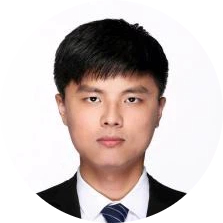 Assoc. Prof. Guchong Li,
Northwestern Polytechnical University, China
Assoc. Prof. Guchong Li,
Northwestern Polytechnical University, China
Guchong Li received the B.S. degree in electrical
engineering and the Ph.D. degree in information and
communication engineering from the University of
Electronic Science and Technology of China, Chengdu,
China, in 2016 and 2021, respectively. From 2018 to
2020, he was a Visiting Student with the
Dipartimento di Ingegneria dell’Informazione,
Università di Firenze, Firenze, Italy. From 2021 to
2023, he was a Postdoctoral Fellow with the
Department of Electronic Engineering, Tsinghua
University, Beijing, China. He is currently an
Associate Professor with the Northwestern
Polytechnical University, Xi’an, China. His research
interests include random finite set, target
tracking, and multisensor data fusion.
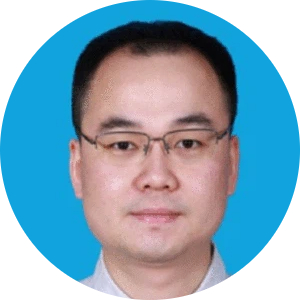 Dr. Yaowen Li,
Tsinghua University, China
Dr. Yaowen Li,
Tsinghua University, China
Yaowen Li, Tsinghua University. He received the B.S.
and Ph.D. degrees in electronic engineering from
Tsinghua University, Beijing, China, in 2017 and
2022, respectively. He is currently an Assistant
Researcher with Tsinghua University. His main
research interests include radar data processing,
multitarget tracking, and multisensor information
fusion.
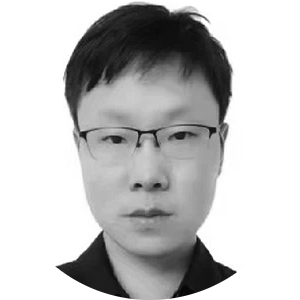 Assoc. Prof. Tuanwei Tian,
Henan University, China
Assoc. Prof. Tuanwei Tian,
Henan University, China
Tuanwei Tian was born in 1988, received the Ph.D.
degree in 2021. He is currently an Associate
Professor with the School of Physics and Electronic
Engineering, Henan University, Kaifeng, China. His
research interests include the communication and
radar signal processing and reconfigurable
intelligent surface, particularly with the
radar-communication integration.
 Assoc. Prof. Muran Guo,
Harbin Engineering University, China
Assoc. Prof. Muran Guo,
Harbin Engineering University, China
Muran Guo received his Ph.D. from Harbin Engineering
University in 2019. From October 2016 to April 2018,
he was a visiting student at the Advanced Signal
Processing Laboratory in Temple University, USA. He
is currently an Associate Professor and a Doctor
Supervisor at the College of Information and
Communication Engineering, Harbin Engineering
University. His primary research interests include
radar signal processing, array signal processing,
compressed sensing, information theory, MIMO radar,
and signal modulation recognition. He served as a
Young Editorial Board Member for Aero Weaponry. He
was the Session chair of Chinese Conference on
Information Fusion in 2025 and ICSPS 2025.