
Special Session 20 会议特别专题 20
Waveform Design and Signal Processing in Underwater Communication and Detection
Description: Underwater acoustic and optical
systems are crucial drivers for marine exploration
and environmental monitoring. However, underwater
channels present unique and severe challenges,
including severe multipath propagation, intense
absorption and scattering, and dynamic factors.
Advanced waveform design and signal processing, as
core technologies, play a decisive role in
overcoming these channel deficiencies and unlocking
the potential of underwater communication and
detection systems. Although significant progress has
been made in recent years, some key issues still
remain to be addressed, such as efficient and robust
waveform design for transmission, rapid channel
fluctuations, and signal recovery under low
signal-to-noise ratio conditions.
To facilitate in-depth academic exchanges on these
cutting-edge topics, this special session aims to
bring together researchers, engineers, and industry
practitioners worldwide engaged in waveform design,
modulation and coding schemes, channel estimation
and equalization, detection and estimation
algorithms, and cross-media acoustic-optical signal
processing. The discussions will focus on the latest
theoretical advancements, algorithm innovations,
experimental validations, and system-level
implementations, with the goal of providing a
targeted and high-level platform for addressing key
technical bottlenecks and planning future research
directions in underwater acoustic and optical
communication and detection.
Session organizers
Assoc. Prof. Wei Men, Harbin Engineering University, China
Dr. Changpeng Liu, Institute of Acoustics, Chinese Academy of Sciences, China
Prof. Meiwei Kong, Tongji University, China
Prof. Fangjiong Chen, South China University of Technology, China
The topics of interest include, but are not limited to:
▪ Novel coding scheme,
modulation scheme, multiplexing scheme and waveform
design for underwater acoustic or optical
communication and detection
▪ Channel estimation and equalization methods for
underwater acoustic or optical communications
▪ Waveform design and signal processing techniques
for integrated underwater communication and
detection
▪ Underwater acoustic-optical joint system design
and signal processing techniques
▪ Simulation/Emulation system and prototype for
underwater communication and detection
▪ Novel underwater image enhancement, target
detection, as well as acquisition, pointing, and
tracking technologies for underwater acoustic or
optical detection
Submission method
Submit your Full Paper (no less than 5 pages with two colums) or
your paper abstract-without publication (200-400
words) via
Online Submission System, then choose Special
Session 20 (Waveform Design and Signal Processing in Underwater Communication and Detection)
Template Download
Introduction of
Session organizer
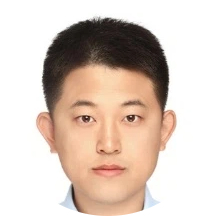 Assoc. Prof. Wei Men,
Harbin Engineering University, China
Assoc. Prof. Wei Men,
Harbin Engineering University, China
Wei Men is an Associate Professor at the College of
Underwater Acoustic Engineering, Harbin Engineering
University. He received the B.S. degree and Ph.D.
degree in underwater acoustic engineering from
Harbin Engineering University, in 2018, and 2023,
respectively. From 2023 to 2025, he was a
Postdoctoral Researcher in the Department of
Electronic Engineering, Tsinghua University. From
January to June 2025, he visited the school of EEE
at Nanyang Technological University, Singapore. His
research interests are underwater acoustic
communications and networks, and integrated
detection and communication. He is the recipient of
the Best Paper Award from IEEE ICICSP and the Best
Student Paper Award from IEEE ICSPCC.
 Dr. Changpeng Liu,
Institute of Acoustics, Chinese Academy of Sciences, China
Dr. Changpeng Liu,
Institute of Acoustics, Chinese Academy of Sciences, China
Dr. Changpeng Liu obtained his Doctorate degree from
the University of Chinese Academy of Sciences (UCAS)
in 2023 and joined the Institute of Acoustics (IOA)
the same year as a Special Research Assistant. In
2023, He was awarded the President's Award of the
Chinese Academy of Sciences (the highest award for
postgraduate students of the CAS), in recognition of
the academic achievements and contributions made
during the doctoral postgraduate period. His
research interests focus on the acoustic signal
processing, array signal processing and underwater
acoustics. His work covers aspects such as the
interference characteristics of underwater acoustic
signals, improved beamforming techniques for
underwater arrays, striation transformation and
image processing methods. To date, he has published
over 19 academic papers and reports, including 13
SCI-indexed papers and 4 EI-indexed conference
papers. Additionally, he has granted 12 invention
patents and awarded the grants of the China
Postdoctoral Science Foundation, CAS Special
Research Assistant (SRA) Program and National
Natural Science Foundation of China for Young
Scientists.
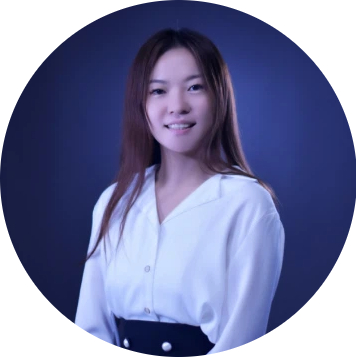 Prof. Meiwei Kong,
Tongji University, China
Prof. Meiwei Kong,
Tongji University, China
Meiwei Kong, from the School of Ocean and Earth
Science at Tongji University, majoring in Marine
Science and Technology, is a research fellow and a
doctoral supervisor. She is also a dual-appointment
doctoral supervisor at the "Shanghai Research
Institute for Intelligent Autonomous Systems" of
Tongji University. Currently, she serves as the
deputy director of the Marine Geology Department
(now the Marine Science and Technology Department)
and the head of the Marine Technology Department.
She is a member of the “China National Scientific
Seafloor Observatory” project team, mainly
researching underwater wireless optical
communication technology. She is a Young Talent
(Overseas) of Shanghai Leading Talent. She was
nominated for the 2023 Ocean Powerhouse Young
Scientist Award. She is the principal investigator
of the second batch of Shanghai Youth Innovation
Laboratory "Tongji University Marine Innovation
Technology Laboratory". She received her doctoral
degree from the Ocean College of Zhejiang
University, majoring in Marine Information Science
and Engineering. She was a postdoctoral researcher
at King Abdullah University of Science and
Technology. Her research interests mainly include
digital signal processing, underwater wireless
optical communication, acoustic-optical-radio
frequency fusion communication, underwater target
detection, underwater acquisition pointing and
tracking, wireless optical energy transmission,
etc.. She has published over 30 SCI journal
articles. She is the associate editor of the IEEE
Photonics Technology Letters journal.
 Prof. Fangjiong Chen,
South China University of Technology, China
Prof. Fangjiong Chen,
South China University of Technology, China
Fangjiong Chen received a B.S. degree in electronics
and information technology from Zhejiang University,
Hangzhou, China, in 1997 and received a Ph.D. degree
in communication and information engineering from
South China University of Technology, Guangzhou,
China, in 2002. He was a senior research associate
in the Department of Computer Science, City
University of Hongkong, Hongkong, China, from July
2006 to June 2007. Currently, he is a full-time
Professor at the School of Electronics and
Information Engineering, South China University of
Technology. He is the Director of the Guangdong
Provincial Key Laboratory of Short-Range Wireless
Detection and Communication.
Prof. Chen is a co-recipient of the Best Demo Award
of 2018 International Conference on
Underwater Networks & Systems, and 2025
International Conference on Communication in China.
He is also a co-author of the Best Paper Award of
2016 International Conference on Computing,
Networking and Communications, 2019 International
Conference on Communication Technology, and 2023
international conference on ubiquitous
communication. His research interests include signal
detection and estimation, array signal processing,
and acoustic/radio communication.