
Special Session 19 会议特别专题 19
Mechanisms, Models, and Applications of Interpretable Methods for Underwater Target Detection and Resolution
Description: While deep learning has achieved
remarkable success in underwater target detection
and resolution, model complexity and
uninterpretability remain critical bottlenecks for
deployment. The rise of interpretable methods brings
a new perspective for understanding model mechanisms
and enhancing model performance.
Therefore, this special session aims to explore the
latest breakthroughs in interpretable theories,
methods and models for underwater target detection
and resolution. In this session, we focus not only
on detection accuracy but also on why and how a
model can detect a small and weak target from
complex backgrounds, and whether its decision align
with physical principles. The session will cover
topics including discriminability mechanism,
intrinsically interpretable models, post-hoc
explanation algorithms, physics-informed data
fusion, and uncertainty quantification. We seek
contributions that bridge the gap between high
performance and transparency, paving the way for
robust intelligent systems in critical applications.
Session organizers
Assoc. Prof. Zipeng Li, Northwestern Polytechnical
University, China
Prof. Hui Li, Northwestern Polytechnical University, China
The topics of interest include, but are not limited to:
▪ The Discriminability
Mechanism of Active and Passive Sonar
▪ Inherently Interpretable Model for underwater
target detection and resolution
▪ Post-hoc Explanation and Attribution Analysis for
Detection and Resolution Tasks
▪ Trustworthy Decisions and Uncertainty Estimation
for Multi-modal Fusion
▪ Applications of Explainable Methods in Engineering
Practice
Submission method
Submit your Full Paper (no less than 5 pages with two colums) or
your paper abstract-without publication (200-400
words) via
Online Submission System, then choose Special
Session 19 (Mechanisms, Models, and Applications of Interpretable Methods for Underwater Target Detection and Resolution)
Template Download
Introduction of
Session organizer
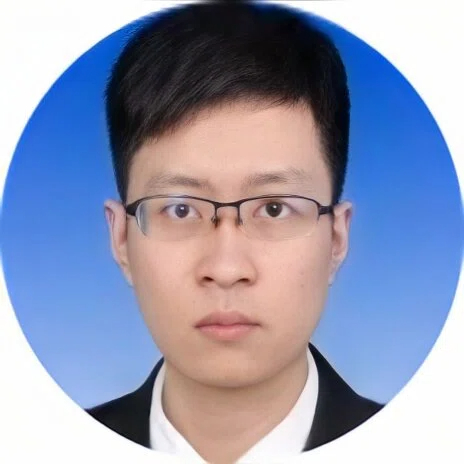 Assoc. Prof. Zipeng Li,
Northwestern Polytechnical University, China
Assoc. Prof. Zipeng Li,
Northwestern Polytechnical University, China
Dr. Zipeng Li is an Associate Professor and Master’s
Supervisor at the Ocean Institute, Northwestern
Polytechnical University (NPU). Dr. Li commenced his
studies at the School of Mechanical Engineering,
Xi’an Jiaotong University (XJTU) in 2010. He earned
dual bachelor’s degrees in Mechanical Engineering
and Business Administration in 2014 and was
subsequently recommended for direct admission to the
doctoral program at XJTU. In 2017, sponsored by the
China Scholarship Council (CSC), he conducted joint
doctoral research at the University of Toronto,
Canada. He was supervised by Prof. Viliam Makis, a
Senior Member of both the Institute of Industrial
and Systems Engineers (IISE) and the American
Society for Quality (ASQ). Dr. Li obtained his Ph.D.
in Mechanical Engineering from XJTU in 2020.
Immediately thereafter, he joined NPU as a
Postdoctoral Fellow, working in collaboration with
Prof. Kunde Yang.
Dr. Li’s long-term research interests lie in
adaptive signal processing, feature extraction, and
pattern recognition. His work specifically addresses
underwater acoustic signal processing, intelligent
target detection and resolution and sonar
technology.
 Prof. Hui Li,
Northwestern Polytechnical University, China
Prof. Hui Li,
Northwestern Polytechnical University, China
Dr. Hui Li is a Professor and Doctor’s Supervisor at
the School of Marine Science and Technology,
Northwestern Polytechnical University (NPU). Dr. Li
received the B.S. degree in ocean technology from
Dalian Ocean University (DLOU), Dalian, China, in
2012, and the M.S. and Ph.D. degrees in underwater
acoustic engineering from Northwestern Polytechnical
University (NPU), Xi’an, China, in 2013 and 2018,
respectively. Since 2018, he has been with the
School of Marine Science and Technology, NPU, where
he is currently a professor. Dr. Li’s long-term
research interests lie in deep ocean sound
propagation, array signal processing, and source
localization.