
Special Session 17 会议特别专题 17
Adaptive Signal Processing for Complex Electromagnetic Environments
Description: With the continuous evolution of
modern electronic warfare and complex
electromagnetic environments, adaptive signal
processing has become an indispensable core
technology for ensuring the stable and efficient
operation of radar, sonar, electronic
reconnaissance, and communication systems.
Traditional signal processing methods are
increasingly difficult to adapt to the dynamic
changes of electromagnetic environments, such as
time-varying clutter, random interference, and
multi-source signal aliasing, which leads to obvious
degradation in the performance of signal detection,
separation, and parameter estimation. As a key
technical means to solve this problem, adaptive
signal processing can dynamically adjust algorithm
parameters according to the real-time
characteristics of the received signals and
environmental changes, thereby improving the
robustness and adaptability of the system in complex
scenarios. This special session is committed to
building an academic exchange platform for global
experts, scholars, and industry practitioners who
engage in adaptive signal processing research. It
focuses on the latest theoretical breakthroughs,
algorithm innovations, hardware implementation
technologies, and practical application cases of
adaptive signal processing in complex
electromagnetic environments, aiming to promote
in-depth discussions on key technical bottlenecks,
summarize cutting-edge research achievements, and
point out future development directions, so as to
promote the innovative development and engineering
application of adaptive signal processing technology
in related fields.
Session organizers
Assoc. Prof. Ming Tan, Information Support Force Engineering University, China
Prof. Jingwei Xu, Xidian University, China
The topics of interest include, but are not limited to:
▪ Adaptive filtering
algorithms for complex electromagnetic clutter
suppression
▪ Adaptive signal processing for integrated sensing
and communication (ISAC) systems
▪ Adaptive beamforming based on Frequency Diverse
Array (FDA) in complex environments
▪ Adaptive signal detection and parameter estimation
under multi-source interference
▪ Machine learning-aided adaptive signal processing
algorithms
▪ Hardware implementation of adaptive signal
processing systems
▪ Application of adaptive signal processing in
electronic reconnaissance and countermeasures
Submission method
Submit your Full Paper (no less than 5 pages with two colums) or
your paper abstract-without publication (200-400
words) via
Online Submission System, then choose Special
Session 17 (Adaptive Signal Processing for Complex Electromagnetic Environments)
Template Download
Introduction of
Session organizers
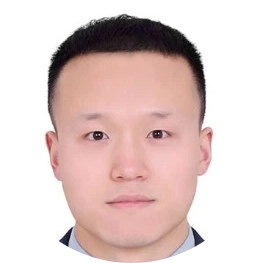 Assoc. Prof. Ming Tan,
Information Support Force Engineering University, China
Assoc. Prof. Ming Tan,
Information Support Force Engineering University, China
Ming Tan received his Ph.D. degree from Air Force
Engineering University in 2020. He is now an
associate professor at Information Support Force
Engineering University, Wuhan, China. His research
interests include array signal processing, waveform
diversity, sparse array, electronic countermeasures.
He has published more than 40 SCI/EI papers. He has
presided over or participated in 8 national and
provincial-level scientific research projects, such
as the National Natural Science Foundation of China
(NSFC) and the Natural Science Foundation of Hubei
Province.
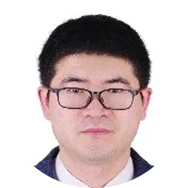 Prof. Jingwei Xu,
Xidian University, China
Prof. Jingwei Xu,
Xidian University, China
He received the B.S. degree in electronic
engineering, and the Ph.D. degree in signal and
information processing, both from Xidian University,
China, in 2010 and 2015, respectively. He currently
serves as Professor at School of Electronic
Engineering, Xidian University. From 2015 to 2017,
he was a lecturer at National Lab of Radar Signal
Processing in Xidian University. From 2017 to 2019,
he was a Postdoctoral Fellow under “Hong Kong
Scholar Program” at Department of Electronic
Engineering, City University of Hong Kong. From 2019
until 2024, he is the Associate Professor position
in Xidian University.
His research interests include array signal
processing, space-time adaptive processing,
multiple-input multiple-output radar, frequency
diverse array radar, waveform diversity, and
multi-functional fusion processing.
He received the prize for excellent Ph.D.
dissertation of the Chinese Institute of Electronics
and the excellent Ph.D. dissertation of Shannxi
Province in 2017. He received the Youth Science and
Technology New Star of Shaanxi Province in 2021, and
the Outstanding Young of Shanxi Province in 2022. He
received the Excellent Youth of NSFC in 2024. He
currently serves as Associate Editor for IEEE
Transactions on Aerospace and Electronic Systems,
and Associate Editor for IEEE Aerospace and
Electronic Systems Magazine.