
Special Session 12 会议特别专题 12
Advanced Waveform Design, Processing and Application in Cognitive Electronic Countermeasures
Description: With the rapid evolution of
intelligent electromagnetic warfare and spectrum
congestion, modern electronic systems are required
to operate reliably in highly dynamic, contested,
and adversarial environments. Traditional fixed
waveform strategies and isolated processing methods
are no longer sufficient to deal with sophisticated
scenarios. The emergence of cognitive systems marks
a paradigm shift: e.g., cognitive radar or jammer
must possess the ability to perceive, learn, adapt,
and act in real time, operating at machine speeds
against adversaries that are equally agile and
intelligent. At the heart of this transformation
lies advanced waveform design—the fundamental
enabler of cognitive electronic warfare.
This special session aims to provide a dedicated
platform for presenting recent advances in cognitive
waveform design, processing and application.
Contributions spanning theoretical analysis,
algorithm development, machine learning approaches,
and system-level implementations are particularly
encouraged, especially those addressing real-time
adaptability and robustness in complex
electromagnetic scenarios.
Session organizers
Assoc. Prof. Xianxiang Yu, University of Electronic
Science and Technology of China, China
Assoc. Prof. Jing Yang, Zhengzhou University, China
Dr. Tao Fan, University of Electronic Science and
Technology of China, China
The topics of interest include, but are not limited to:
▪ Advanced waveform
design for cognitive electronic countermeasure
systems
▪ Adaptive and environment-aware waveform
optimization techniques
▪ Adaptive waveform design for integrated radar and
jamming systems
▪ Cognitive and environment-aware radar adaptation
▪ Cognitive signal processing methods for electronic
countermeasures
▪ Interference generation, control, and
effectiveness evaluation
▪ Intelligent jamming strategies against modern
radar systems
▪ Anti-countermeasure (ECCM) techniques for
cognitive radars and jammers
▪ Game-theoretic approaches to radar-jammer
interactions
▪ Distributed and cooperative cognitive
countermeasure systems
▪ System architectures and hardware considerations
for real-time implementation
Submission method
Submit your Full Paper (no less than 5 pages with two colums) or
your paper abstract-without publication (200-400
words) via
Online Submission System, then choose Special
Session 12 (Cognitive Radar Waveform Design and
Integrated Radar and Jamming Countermeasure)
Template Download
Introduction of
Session organizers
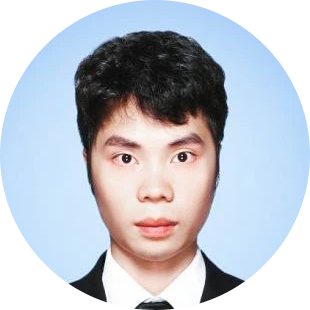 Assoc. Prof. Xianxiang Yu,
University of Electronic Science and Technology of China, China
Assoc. Prof. Xianxiang Yu,
University of Electronic Science and Technology of China, China
Xianxiang Yu received the B.S. degree in electronic
information engineering and the Ph.D. degree in
signal and information processing from the
University of Electronic Science and Technology of
China (UESTC), Chengdu, China, in 2014 and 2020,
respectively. From 2018 to 2019, he was a Visiting
Researcher with Pennsylvania State University, State
College, PA, USA. From 2020 to 2022, he was a
Postdoctoral Fellow with UESTC, where he is
currently an Associate Professor with the School of
Information and Communication Engineering. His
research interests include MIMO radar, array signal
processing, and waveform optimization. He received
Young Elite Scientists Sponsorship Program of the
China Association for Science and Technology in 2023
and is currently the editorial board member of
Remote Sensing and Journal of Radars.
 Assoc. Prof. Jing Yang,
Zhengzhou University, China
Assoc. Prof. Jing Yang,
Zhengzhou University, China
Jing Yang received the B.S. degree in electronic
information engineering and the Ph.D. degree in
signal and information processing from the
University of Electronic Science and Technology of
China, Chengdu, China, in 2017 and 2022,
respectively. From 2019 to 2020, she was a Visiting
Researcher with the University of Naples Federico
II, Naples, Italy. She is currently an Associate
Professor with Zhengzhou University, Zhengzhou,
China. Her research interests include cognitive
radar waveform optimization,and multi-function
integrated radio frequency systems. She received
Young Elite Scientists Sponsorship Program of Henan
Province in 2025, and is currently a youth editorial
board member of Radar Science and Technology.
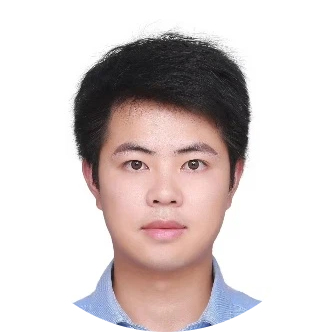 Dr. Tao Fan,
University of Electronic Science and Technology of China, China
Dr. Tao Fan,
University of Electronic Science and Technology of China, China
Tao Fan received the B.S. degree in communication
engineering from Chongqing University, Chongqing,
China, in 2019, and the Ph.D. degree in information
and communication engineering with the School of
Information and Communication Engineering,
University of Electronic Science and Technology of
China (UESTC), Chengdu, China, in 2025. Form October
2023 to October 2024, he was a visiting Ph.D.
student in the Department of Electrical and
Information Technology Engineering, Università degli
Studi di Napoli “Federico II”, Napoli, Italy. He is
currently a Post-Doctoral Fellow with UESTC. His
research interests include radar
clutter/interference suppression and waveform
optimization.